
This World Sight Day, we’re sharing three ways teachers and families can support children’s eye health:
Children’s voices matter. Giving them space to explain what they find difficult can be a first step towards getting support.
An estimated 17.8 million children aged 5–17 worldwide live with uncorrected refractive errors, such as short-sightedness, long-sightedness or astigmatism (IAPB & Seva Foundation, 2024).
Clear vision supports learning.
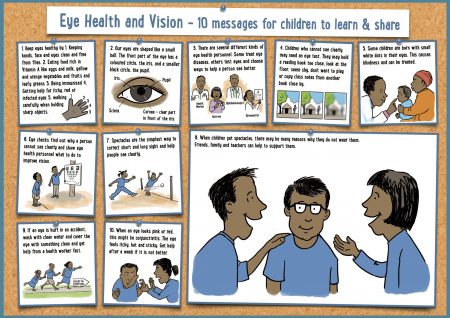
Can every child in your classroom see the board and their books clearly? Look for a child who holds a book very close, looks at the floor, seems shy, avoids play or copies notes from a friend’s book. They may not be distracted. They may need an eye test.
Encourage eye checks. Support children wearing glasses.
A pair of glasses can change a child’s day. An eye check finds out why a child can’t see clearly. Spectacles are the simplest way to correct short and long sight. Friends, family and teachers can help a child feel proud to wear them.
Build healthy eye care habits.
Keep hands, face and eyes clean and free from flies. Eat foods rich in Vitamin A, such as eggs, milk, orange and yellow vegetables and leafy greens. Make sure children are immunised. Get help quickly for red, itchy or infected eyes.
“Eye health is an important part of children’s health, learning and participation. Health education should help children recognise difficulties with their vision, communicate their needs and seek support. Teachers and families play a vital role in connecting that awareness to appropriate eye care.”
Dr. Lilanga Hasini Batawalage
CEO, Children for Health
Help a child see their future.
Start a conversation about eye health. Help children get an eye check when needed.
Notice difficulties with seeing. Download our free Eye Health & Vision poster and put it up in your school, clinic or community centre.
Share this with parents and teachers.
Download our free Eye Health poster or our comprehensive Eye Health book! We have loads of other excellent free educational resources available too.