
International Literacy Day 2026
On International Literacy Day, we’re looking beyond the ability to read. Health literacy is about being able to access, understand, trust and use health information in everyday life.
Because information becomes powerful when it can be understood and put into action.
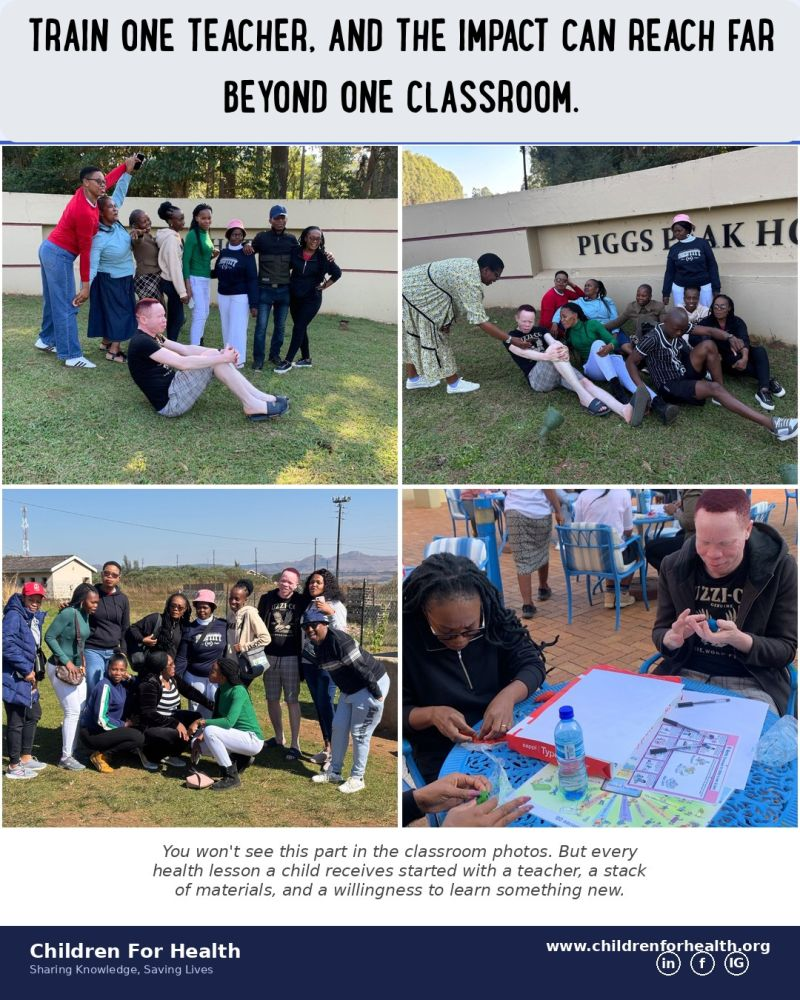
Before the classroom, there’s this.
The preparation, the learning, the conversations and the people taking the time to understand the materials before sharing them with children.
This part of the work is not always visible. But it is an important part of making health education meaningful and useful.
To every teacher, volunteer and partner who gives their time, learns with us and carries that knowledge forward, thank you. You make this work possible.
Learn more about the work behind the work → Teaching the Approach
A child can read a health message without understanding what it means for their life. So what does true health literacy look like?
Health literacy is more than reading a leaflet
WHO describes health literacy in terms of being able to access, understand, appraise and use health information and services to promote and maintain health and wellbeing.
First: can people access the information?
Health information needs to be available in forms and channels people can reach including children, families and communities facing language, social, economic or other barriers.
Every poster and storybook we create is shared freely, so cost is never the barrier.
Second: does it make sense?
A message can be accurate and still be difficult to understand. That’s why every poster, illustration and storybook we produce takes time to get right written and designed in language children can understand well, not just accurately.
Third: can people judge what to trust?
Health information comes from classrooms, communities, media and online spaces. Health literacy also means being able to think critically about health information.
Finally: can people use it?
Information is not the end goal. The goal is to support informed decisions, healthier behaviours and meaningful participation in health.
Health literacy is where information meets action.
For Children for Health, health education should be understandable, meaningful and usable in people’s everyday lives.
On International Literacy Day, let’s move beyond: “Did they receive the message?” Let’s ask: “Could they understand it and use it?”
Help a child read the word that could keep them safe.